

In this articleSections: 8
- 1Why Is Peanut Butter Ideal for Weight Gain?
- 2Golden Rules of Healthy Weight Gain
- 1. A Mild Calorie Surplus
- 2. More Meals, Not Bigger Ones
- 3. Liquid Calories
- 4. Resistance Training
- 38 Tips for Adding Healthy Calories
- 4Sample One-Day Meal Plan (About 2,800 Calories)
- 5Choosing the Right Peanut Butter
- 6Common Weight Gain Mistakes
- 7Frequently Asked Questions
- How many spoonfuls of peanut butter should I eat a day to gain weight?
- Does peanut butter cause belly fat?
- Can underweight children eat peanut butter too?
- 8Related Articles in the Onjil Magazine
Contrary to what many people think, healthy weight gain can sometimes be harder than weight loss. Thin people usually have a small appetite and feel full quickly, and quick fixes like fast food and soda bring belly fat and fatigue in the long run instead of muscle and energy. The right way is to add dense, nutritious calories to your meals, and this is where peanut butter shines. In this Onjil article we offer a simple, practical roadmap for gaining weight the right way.
Why Is Peanut Butter Ideal for Weight Gain?
- High calorie density: Each tablespoon has about 95 calories without taking up much volume.
- Significant protein: 7 to 8 g per two tablespoons, which helps make the weight you gain more muscle than fat.
- Healthy fats: Monounsaturated and polyunsaturated fats that, unlike trans fats, do not harm the heart.
- Versatility: It pairs with bread, fruit, milk, oatmeal and even savory dishes, so you never get tired of it.
Golden Rules of Healthy Weight Gain
1. A Mild Calorie Surplus
Eat about 300 to 500 calories more per day than your body needs. This usually leads to a gain of one to two kilograms per month, a pace at which your body has the chance to turn most of it into muscle.
2. More Meals, Not Bigger Ones
If you fill up quickly, eat five to six smaller meals instead of three heavy ones. Every snack is a chance to add 200 to 300 healthy calories.
3. Liquid Calories
Shakes and smoothies make you feel less full than solid food. A banana and peanut butter smoothie easily adds 500 nutritious calories to your day.
4. Resistance Training
Without weight training, a large part of the extra calories turns into fat. Two to three strength sessions a week direct the extra calories toward building muscle.
8 Tips for Adding Healthy Calories
- Stir a tablespoon of peanut butter into your breakfast oatmeal (+95 calories).
- Spread peanut butter on toast instead of animal butter or jam.
- Dip apple or banana slices in peanut butter for a simple, tasty snack.
- Stuff a few Khasooei dates with peanut butter for a high-energy natural treat.
- Add a tablespoon of peanut butter and two tablespoons of oats to your smoothies.
- Make a salad or noodle sauce with peanut butter, soy sauce and lime juice.
- Make homemade energy bites and keep them in your bag at all times.
- Before bed, drink a glass of milk with a tablespoon of peanut butter.
Sample One-Day Meal Plan (About 2,800 Calories)
| Meal | Menu | Approx. calories |
|---|---|---|
| Breakfast | Oatmeal with milk, a tablespoon of peanut butter and a banana | 550 |
| Mid-morning snack | 4 dates stuffed with peanut butter | 300 |
| Lunch | Rice, chicken, salad with olive oil | 750 |
| Afternoon snack | Banana and peanut butter smoothie | 500 |
| Dinner | Omelet with whole-grain bread and cheese | 500 |
| Before bed | A glass of milk | 150 |
This table is only a sample pattern. To design a breakfast that fits your goal, use the Onjil breakfast calculator, and find more ideas on the healthy weight gain page.
Choosing the Right Peanut Butter
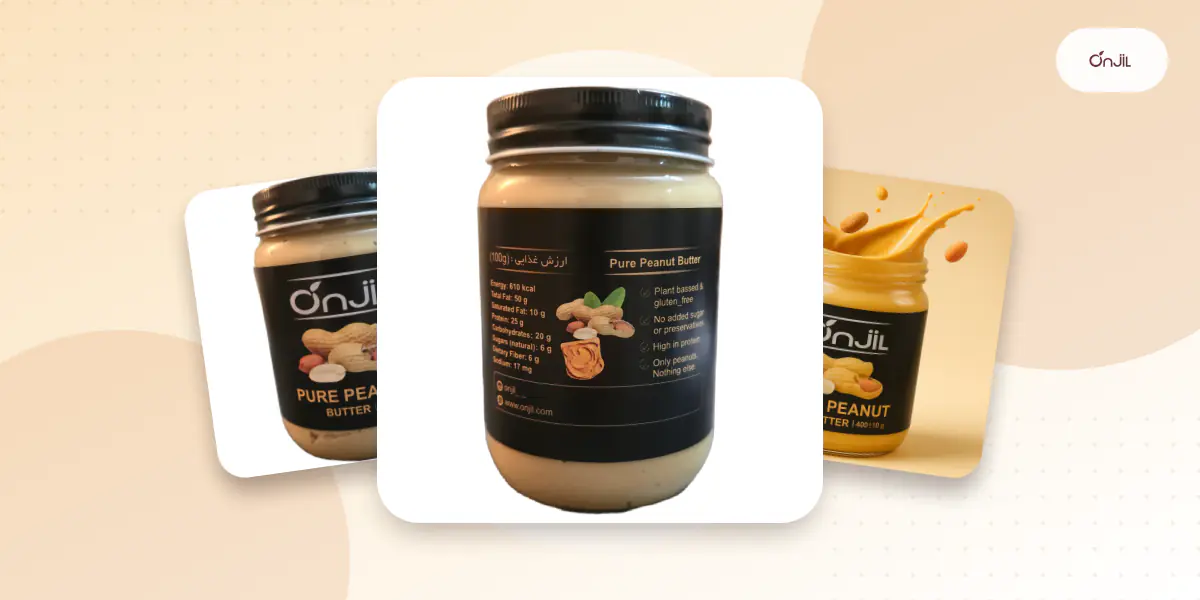
For healthy weight gain, the quality of calories matters as much as their quantity. Industrial spreads with sugar and hydrogenated oil deliver empty calories and trans fats. Onjil pure peanut butter is made only from top-grade peanuts with no additives, so every spoonful is "useful" calories. If you want a sweeter taste, peanut butter with milk chocolate is a delicious choice for an afternoon snack.
Common Weight Gain Mistakes
- Relying on fast food and industrial sweets as the main source of calories
- Skipping breakfast and making up for it with a heavy dinner
- Expecting quick results and giving up after two weeks
- Ignoring sleep; your body builds muscle while you sleep
Frequently Asked Questions
How many spoonfuls of peanut butter should I eat a day to gain weight?
Most people get good results with 3 to 4 tablespoons a day alongside a balanced diet. This adds about 300 to 400 calories.
Does peanut butter cause belly fat?
No, as long as your overall daily calories are balanced and you stay active and do strength training. Belly fat is more closely linked to sugar, sweetened drinks and a sedentary lifestyle.
Can underweight children eat peanut butter too?
Yes, provided they have no allergy. A smaller amount (a teaspoon to a tablespoon) is enough for children; find more ideas in nutrition for kids.
Onjil recommends: Order Onjil pure peanut butter from the Onjil shop, or choose Onjil ready-made packs that include butter, dates and oats all in one.
Related Articles in the Onjil Magazine
From reading to tasting, it's just one step away!
Onjil's nuts, plant-based butters, dried fruit and superfoods: natural, additive-free and delivered fast.